
Re-Defining Success.
Finally Measurable
The Good Time Ratio (GTR) Metric
A New Standard for Measuring Life Success
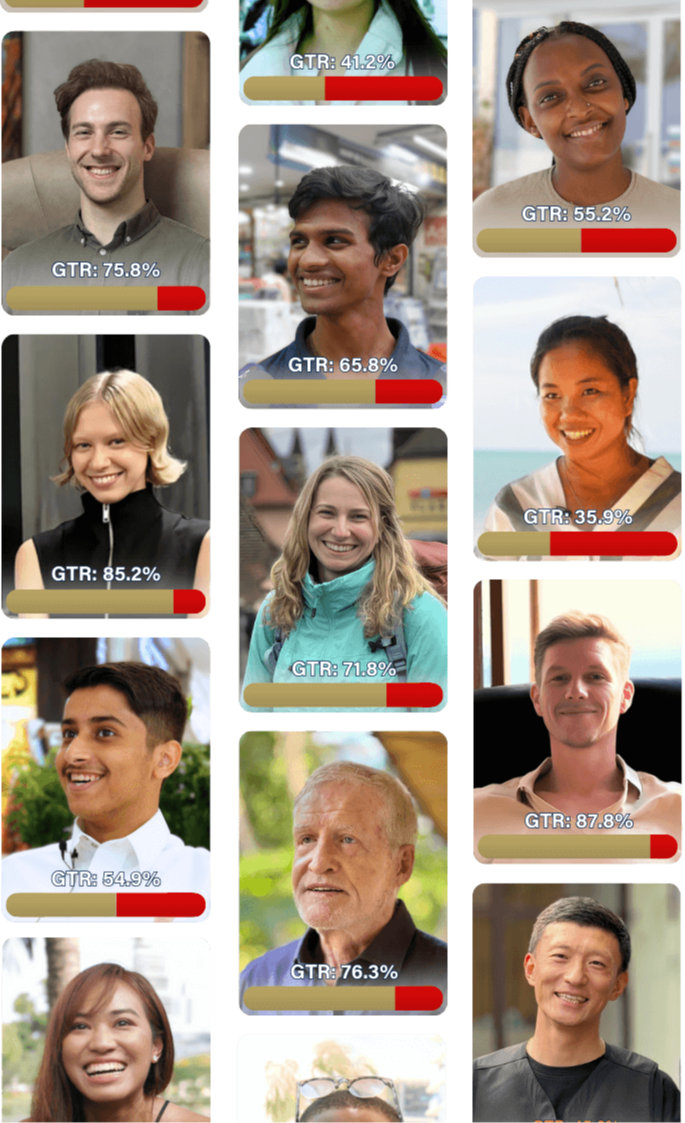
Pioneering the Future of Life Design
A measurable foundation for human well-being and long-term success.

Understanding what truly makes life fulfilling has driven philosophy, psychology, and social science for centuries.
The Good Time Ratio (GTR) translates this question into a measurable form by capturing the proportion of attractive moments (good times) relative to unattractive moments across specific periods and over entire lifetimes.
As the first metric to reflect individual well-being accurately across diverse social and cultural contexts, it reveals hidden patterns. By doing so, it enables a more meaningful understanding of personal and collective growth — moving beyond narrow success indicators like financial wealth, GDP, or revenue, while redefining success as high and lasting life satisfaction.
Why the Good Time Ratio Matters

A personalized path to fulfillment without overwhelm
Modern life offers endless options, advice, and expectations, yet little clarity about what truly leads to fulfillment. Without a clear reference point, people often follow external voices or social norms that lead to unsatisfying situations, misaligned with their own needs and values.
The Good Time Ratio clarifies what genuinely increases or decreases life satisfaction on an individual level. By cutting through noise and overwhelm, it aligns mind and heart, restores inner calm, and enables confident, self-directed choices. Over time, this clarity reduces uncertainty, anxiety, and fear at their root.

Centralizing what actually drives businesses
At their core, businesses exist to deliver good times in different forms for customers, employees, and shareholders alike. It is no surprise that business success fully depends on the quality of human experience across all these groups.
Yet most organizations attempt to improve outcomes by optimizing proxy KPIs instead of focusing on what truly drives them. The Good Time Ratio quantifies experience quality and pinpoints where it is created or lost. It turns satisfaction from a vague value into a strategic lever that naturally improves innovation, retention, relevance, and long-term profitability.

Helping governments do what they are designed to do
The core purpose of governments is to support populations in living well. Yet they rely on indicators that only assume well-being instead of measuring it directly. The result is large-scale investments that often fail to deliver the promised improvement in life quality, creating frustration for both policymakers and populations.
The Good Time Ratio closes this gap by revealing current satisfaction levels across society and showing whether and where policies will improve lived experience before they are implemented. This enables smarter resource allocation, stronger social cohesion, crisis resilience, and long-term political stability grounded in real public trust.
How the Good Time Ratio Works
The Good Time Ratio measures the proportion of time a person is attracted to experience versus time that is neutral or unattractive.

Rather than abstract ideas like “happiness,” GTR focuses on felt attraction and aversion, which is directly accessible to human experience. Experiences are assessed as Attractive (tending to move towards), Neutral (no movement), or Aversive (tending to move away from) based on how they are perceived in the moment. Grounded in these underlying drivers of behavior, GTR reveals what shapes decisions and life direction.
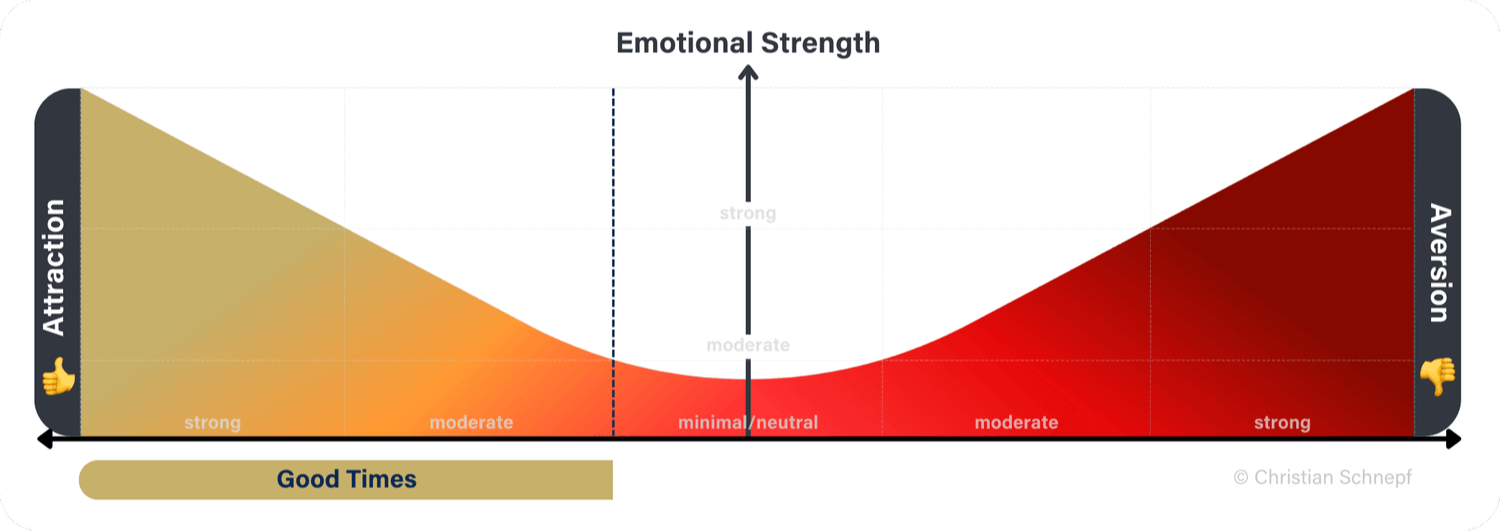
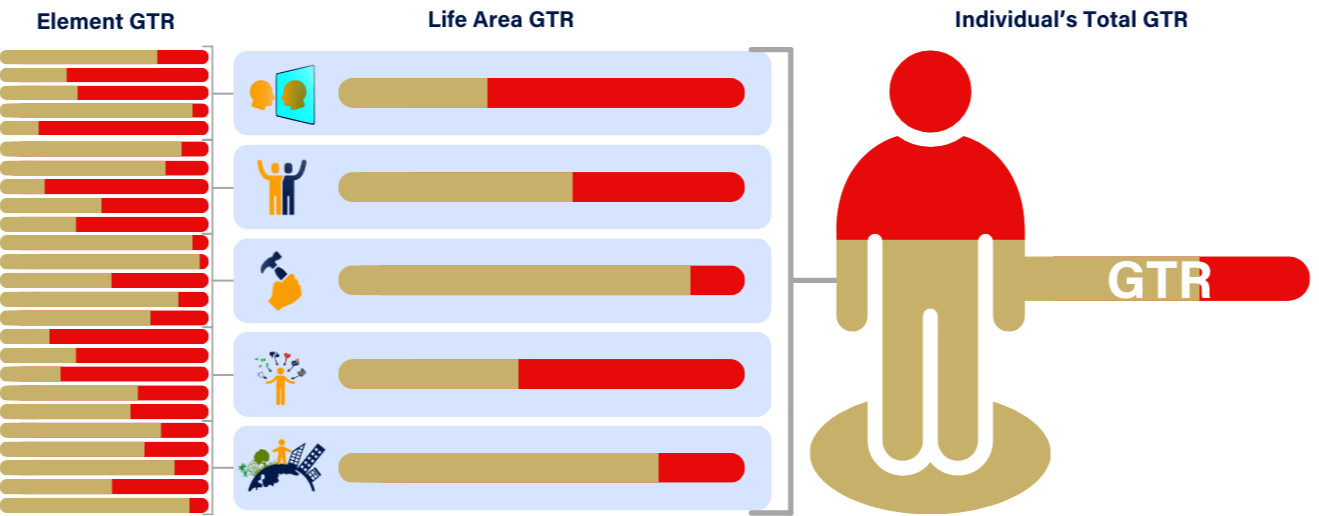
Attraction and aversion are difficult to pinpoint in real time. GTR therefore evaluates experiences at a granular level within the broader frame of the five universal life areas that evolutionarily shape behavior through perceived attraction and aversion. This ensures the overall picture is complete, comparable, and actionable, without losing nuance.
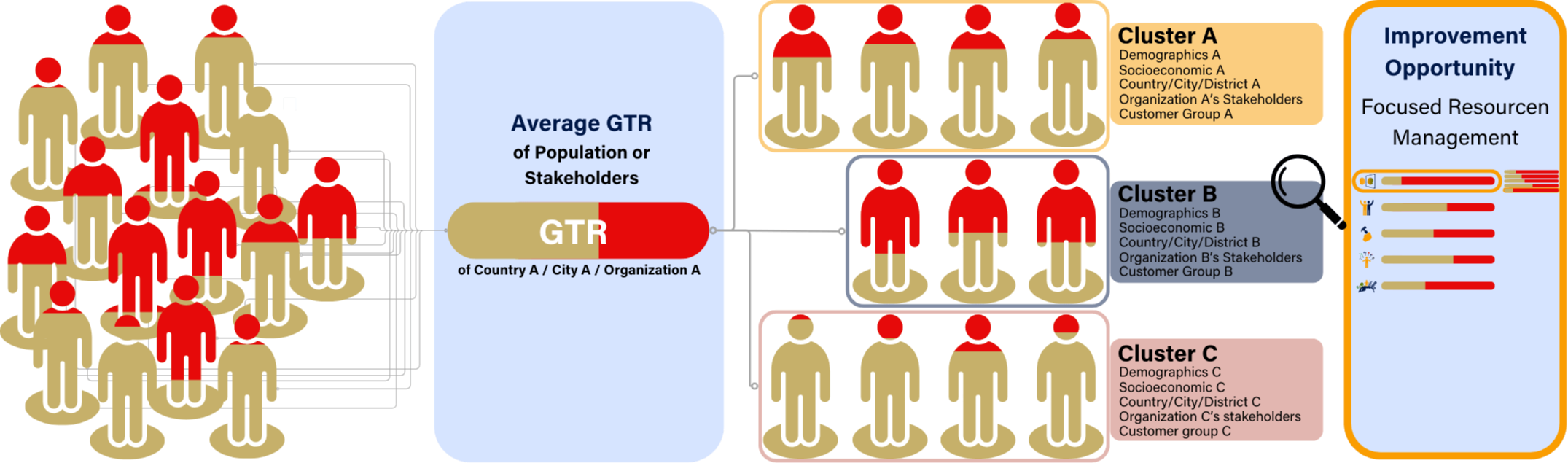
When GTR data is aggregated across people, collective patterns begin to emerge. This enables understanding group stability and predicting shifts before they manifest in behavior, allowing individuals, organizations, and governments to move from assumptions to evidence-based improvement.
Drawn from Real Lives. Validated Across Cultures.
The Good Time Ratio was developed and refined through real human experience. Together with the Maximized Good Time (MGT) life objective, its decisive calculation factors were distilled from qualitative interviews, behavioral observation, and iterative testing with people across cultures, ages, professions, and life situations.
Final validation occurred in real-time testing: participants were first asked to estimate their GTR for a recent period, then completed the measurement using the proposed equation. This enabled a direct comparison between intuitive self-assessment and calculated results.
Across cultures and contexts, the measured GTR consistently aligned more closely with lived experience than memory-based estimation alone. Repeated use over time revealed stable and reliable patterns, showing that GTR reflects life as it is actually lived—rather than how it is selectively remembered or idealized.
Test your GTR in the GoodTime App
The Future We’re Creating
Tomorrow's Possibilities as GTR moves from insights to shared standard

A healthy measure of personal success
As GTR gets gradually adopted by individuals, life satisfaction increasingly becomes a measure of personal success. Conversations begin to shift from “How much do you earn or own?” to “How is your GTR right now?”, fostering more compassion, honesty, and mutual support.

Realigning business incentives
As organizations adopt GTR alongside traditional performance metrics, decisions increasingly favor actions that sustainably improve stakeholder well-being. Leaders begin to see that raising the GTR of those they impact also strengthens engagement, loyalty, and long-term performance.

An orientation for societal growth
As GTR becomes more widely adopted, it opens a new reference point for societal progress. When life quality is measured directly and reliably, policies and systems can be evaluated by how they truly affect human lives — enabling more grounded, humane, and effective development over time.
Become a Key Player in Redefining Success
Receive notes offering clarity on what creates Good Times and how to move toward it.
No spam. Good times only. Your data stays private. Unsubscribe anytime.